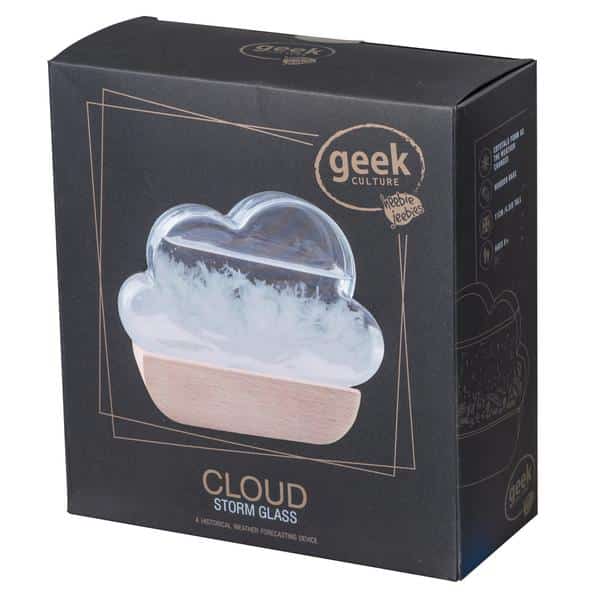
Description How to read the Storm Glass Clear Liquid = Bright and clear weather Cloudy Liquid, sometimes with small stars and crystals at the top = Cloudy weather and often predicts thunderstorms and rain. Small Stars in Liquid = Humid or foggy weather Large Flaky Crystals = Cloudy skies, snow in winter. Threads of Crystals At The Top = Windy Weather Crystals At The Bottom = Frost may be coming. There are competing ideas on how the storm glass works, however the prevailing idea is that temperature & air pressure affect solubility of crystals. The storm glass was popularised by Admiral Robert Fitzroy after his historic voyage on the HMS Beagle, when the British Crown distributed these to the populace after a particularly violent storm season. Teaching ideas that complement Fitzroy’s Strom Glass Research the history of the storm glass. How accurate is the storm glass? Check this against your local weather and create a student poster about it. What is the fastest ever recorded wind speed? What about the most amount of rainfall? Learn about different cloud types. Graph your weather measurements and present it to class. Setup a GoPro and stream the weather station to your classroom. Research extreme weather events around the world. Find out how storm fronts form and their relationship to atmospheric pressure. School science visit on the weather! School science visit – weather & pressure!